Paddle Hard, Live Stronger: Why SUP Is the Full-Body Workout You've Been Sleeping On
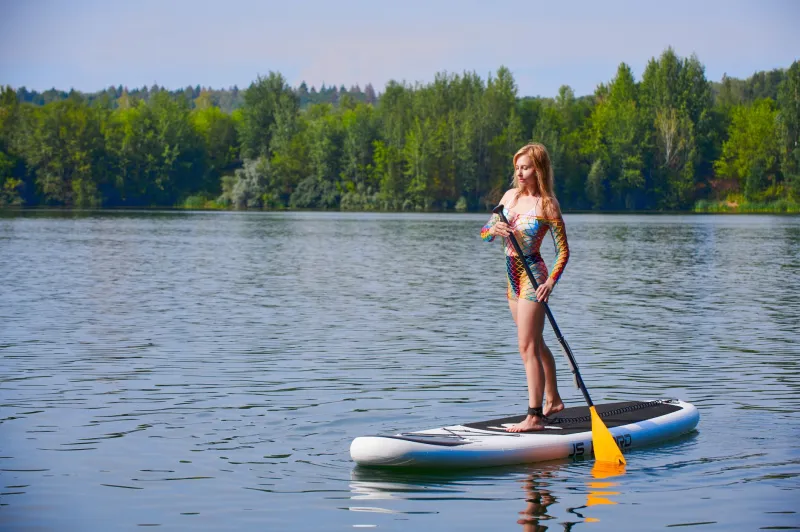
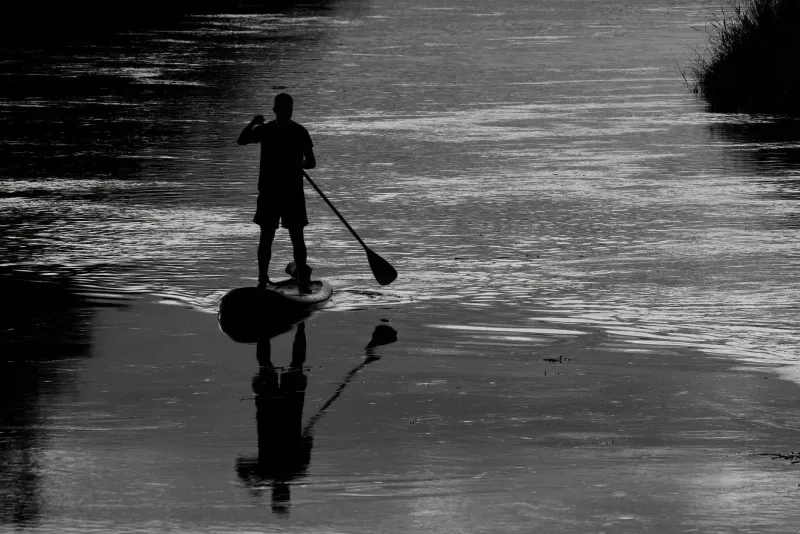
Let's be honest — when most people picture stand-up paddleboarding, they picture someone lazily drifting across a glassy lake, maybe sipping a drink, definitely not breaking a sweat. And sure, SUP can be that. But that image undersells it in a massive way. Ask any serious paddler, or better yet, ask a trainer who's worked with SUP athletes, and they'll tell you the same thing: this sport will absolutely wreck you in the best possible way.
Post-pandemic America rediscovered the outdoors in a big way, and SUP was one of the biggest beneficiaries. Board sales spiked. Rental operations popped up on rivers, reservoirs, and coastal inlets from Maine to California. But what's kept people coming back isn't just the scenery — it's how genuinely good paddling is for your body.
What's Actually Happening When You Paddle
Here's the thing most casual paddlers don't fully appreciate: every single stroke you take on a board is a compound movement. You're not just pushing water with your arms. You're rotating through your torso, stabilizing through your hips, gripping through your hands and forearms, and — critically — doing all of this while your legs and feet are constantly micro-adjusting to keep you balanced on a moving surface.
That last part is where the magic happens. The instability of the board forces your stabilizer muscles to fire continuously. We're talking about the deep core muscles — your transverse abdominis, multifidus, and obliques — that traditional gym exercises like crunches barely touch. Even a moderate paddle session demands sustained engagement from these muscle groups in a way that most people never experience during a standard workout.
Fitness trainer and certified SUP instructor Mara Hendricks, who coaches athletes in the Pacific Northwest, puts it plainly: "I've had clients with six-pack abs who came out to paddle for the first time and were sore in places they didn't know existed. The proprioceptive demand of the board is unlike anything you get on solid ground."
Comparing SUP to Traditional Training
So how does paddleboarding actually stack up against the stuff you'd do at the gym? Research and anecdotal evidence from trainers both point in the same direction — SUP competes surprisingly well.
A vigorous paddle session can burn anywhere from 400 to 700 calories per hour depending on conditions, pace, and body weight. That puts it in the same ballpark as cycling or rowing. But unlike those activities, SUP simultaneously demands balance, coordination, and functional strength in a single movement pattern. You're getting aerobic conditioning and resistance training at the same time.
SUP yoga has taken this even further. Practitioners performing flows on a floating board report dramatically increased difficulty compared to mat yoga — the instability amplifies every pose, turning a warrior sequence into a serious neuromuscular challenge. Studios and outdoor programs across states like Colorado, Texas, and Florida have built entire class formats around it.
And then there's SUP racing. Elite paddlers competing in events like the Carolina Cup or the Battle of the Paddle have physiques that rival competitive swimmers and cyclists. These are athletes with exceptional cardiovascular capacity, powerful rotational strength, and lean, functional muscle built almost entirely through paddling.
The Pandemic Shift That Changed Everything
When gyms shut down in 2020, a lot of Americans panicked about losing access to their fitness routines. But a significant chunk of that population found something unexpected outdoors. SUP participation surged, and a lot of those newcomers weren't just tourists — they were serious fitness people looking for a legitimate alternative.
Many of them never went back to the gym full-time. The combination of physical challenge, mental reset, and genuine enjoyment was something a treadmill just couldn't replicate. Social media played a role too. Paddleboarding content exploded across platforms, and the lifestyle it represented — active, adventurous, connected to nature — resonated with a generation that was rethinking what wellness actually looked like.
Training Progressions for Every Level
Whether you're just starting out or you're already comfortable on the water, there's a way to structure your SUP sessions to get maximum fitness benefit.
Beginner (0–3 months): Focus on just getting comfortable. Paddle in calm, flat water and work on your stance — feet hip-width apart, knees slightly bent, core engaged. Even short 30-minute sessions will build foundational stability and introduce your body to the movement patterns. Don't underestimate the fatigue you'll feel early on.
Intermediate (3–12 months): Start adding structure. Alternate between steady-state paddling for cardio endurance and interval bursts where you paddle hard for 30 seconds, then recover. Introduce SUP yoga or balance drills — try standing on one foot while holding your paddle overhead. Begin exploring mild current or light chop to increase the stabilization demand.
Advanced (1+ year): Train with purpose. Map out distance goals, work on your stroke efficiency, and consider joining a local SUP club or racing community. Add cross-training with swimming or gym-based rotational strength work to support your paddle performance. If you're near whitewater, river SUP introduces a completely different physical challenge that will push your athleticism to new levels.
The Mental Game Is Real Too
It would be incomplete to talk about SUP fitness without mentioning what it does for your head. There's growing evidence that exercise performed in natural environments — particularly near water — has amplified mental health benefits compared to indoor workouts. Paddlers often describe a meditative quality to their sessions, a kind of focused calm that's hard to find in a crowded gym.
For a lot of people, that mental component is what actually makes them consistent. And consistency, as any trainer will tell you, is the whole game when it comes to fitness.
Get Out There
You don't need to be an athlete to start. You don't need expensive gear or a truck with a roof rack. Most lakes and rivers in America have a rental spot within a reasonable drive, and a $30 session could be the beginning of a fitness habit that genuinely changes your body and your relationship with the outdoors.
SUP has been hiding in plain sight as one of the most effective, enjoyable, and accessible full-body workouts available to everyday Americans. The water's been waiting. It's time to paddle.