Dead Boards Don't Float: The Hidden Cost of Paddleboarding's Throwaway Culture
Somewhere in a garage in San Diego, there's a beat-up epoxy longboard with a cracked nose, a delaminating deck, and a rail that's seen better days. Its owner bought a shiny new inflatable two seasons ago and hasn't looked back. The old board just sits there, collecting dust, slowly becoming a monument to upgrade culture.
Multiply that by tens of thousands of paddlers across the country, and you start to see the shape of a problem nobody in the SUP world really wants to talk about.
Paddleboarding has exploded in the last decade. That growth is genuinely exciting — more people on the water, more community, more stoke. But the flip side is a mounting wave of discarded gear that doesn't decompose, can't easily be recycled, and is increasingly ending up in landfills or worse. The sport that celebrates clean water and open skies has a waste problem, and it's time to actually look at it.
What's Inside That Board, Anyway?
Before we talk about what happens to old boards, it helps to understand what they're made of. Most hardboards are constructed from a foam core — typically EPS (expanded polystyrene) or PU (polyurethane) — wrapped in layers of fiberglass and epoxy resin. Inflatables use drop-stitch PVC, which is essentially two layers of plastic fabric bonded under pressure.
None of these materials are particularly earth-friendly at end of life. EPS foam breaks into microplastics. Fiberglass and epoxy are non-recyclable in any conventional sense. PVC is technically recyclable but rarely accepted at standard facilities, and the adhesives used in inflatable construction make separation nearly impossible.
When a board gets trashed — whether it's a dinged-up hardboard or a leaky inflatable — it almost always ends up in a landfill where it will sit, essentially unchanged, for centuries. That's not a dramatic exaggeration. It's just chemistry.
The Upgrade Trap
Gear companies aren't doing anything wrong by making better products. Innovation is good. But the marketing cycle that encourages paddlers to replace functional equipment every two or three years is doing real damage.
Social media amplifies this. When your feed is full of paddlers rocking the latest carbon-fiber race board or the newest inflatable with a triple-layer deck, your three-year-old board starts to feel ancient even if it's perfectly functional. The psychology of upgrade culture is powerful, and the SUP industry has leaned into it hard.
The result? A growing graveyard of boards that were discarded not because they failed, but because something newer came along.
The Repair Revolution Quietly Happening in Your Community
Here's the good news: a grassroots repair movement is gaining real traction among serious paddlers, and it's more accessible than you might think.
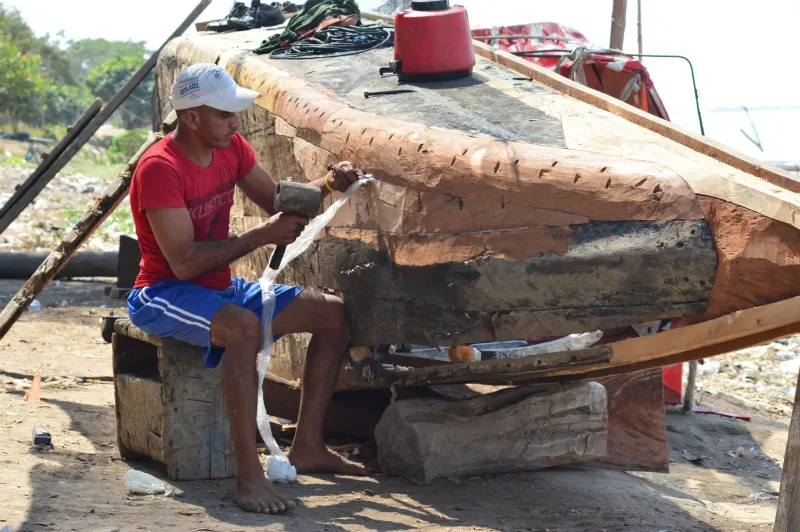
In coastal cities from Portland, Oregon to Sarasota, Florida, small repair shops and community workshops are popping up with a specific mission — keep boards alive longer. These aren't just surf shops with a ding-repair kit. They're full-service operations where skilled technicians can regloss a delaminated deck, rebuild a shattered nose, or patch an inflatable that's lost its structural integrity.
The economics make sense too. A quality hardboard repair typically runs $50 to $200 depending on the damage. Compare that to $600 to $2,000 for a new board, and the math is obvious. Fixing your board isn't just environmentally responsible — it's financially smart.
For inflatables, the repair curve is even more forgiving. Most leaks can be patched at home with a $15 kit and an afternoon of patience. Seam separations are trickier but not impossible for someone willing to learn. YouTube tutorials and paddling forums like SUP Connect have made DIY repair more accessible than ever.
Artists Are Turning Old Boards Into Something Unexpected
Beyond repair, a different kind of innovation is emerging — one that's equal parts practical and genuinely beautiful.
Across the country, artists and makers have started treating discarded paddleboards as raw material. In Asheville, North Carolina, one woodworker has been slicing up old EPS-core boards and using the foam as lightweight filler in custom furniture builds. In Austin, a collective of muralists has turned a dozen retired boards into an outdoor gallery installation that rotates quarterly, each piece painted by a local artist and auctioned for charity.
In Hawaii — ground zero for modern SUP culture — a nonprofit called Sustainable Coastlines Hawaii has partnered with board shapers to create a program that accepts donated boards, strips usable materials, and repurposes foam cores as floating platforms for marine habitat restoration projects.
These aren't isolated stories. They're the beginning of a cultural shift that's starting to mirror what happened in the cycling and skateboarding communities, where repair culture and creative reuse became points of identity, not just practicality.
What You Can Actually Do Right Now
You don't have to be an artist or a repair technician to be part of the solution. There are practical, low-effort ways every paddler can extend the life of their gear and reduce their footprint.
Learn one repair skill. Seriously, just one. Start with ding repair if you have a hardboard, or inflatable patching if you're rocking a drop-stitch. The learning curve is gentle, and the payoff — in both savings and satisfaction — is real.
Buy used before buying new. The secondhand SUP market is healthier than ever. Facebook Marketplace, Craigslist, and dedicated paddling groups are full of quality boards at 40 to 60 percent off retail. Buying used keeps a board out of the landfill and puts money back in a fellow paddler's pocket.
Donate before you dump. Community centers, summer camps, adaptive paddling programs, and youth sports organizations often desperately need equipment and can't afford new gear. Your old board might be past its prime for your standards but perfect for a kid learning to paddle for the first time.
Ask your local shop about take-back programs. Some retailers are beginning to experiment with board trade-in and recycling initiatives. If yours doesn't have one, ask them about it. Consumer demand is how these programs get started.
Store gear properly. UV exposure, heat, and moisture are the enemies of board longevity. A proper board bag, shaded storage, and a rinse after every saltwater session can add years to your equipment's life without a single dollar spent.
The Bigger Picture
The SUP community has always had a complicated relationship with the environment. Most paddlers love the water deeply — it's why they paddle. But loving the water and protecting it are two different things, and the gear we use to access it is part of that equation.
The brands are starting to pay attention. A handful of manufacturers are experimenting with bio-based resins, recycled materials, and modular construction designed for easier repair. It's early days, and the industry has a long way to go, but the conversation is happening.
More importantly, the community itself is driving change. The repair nerds, the upcycling artists, the secondhand dealers — they're not waiting for a corporate sustainability pledge. They're just doing the work, board by board.
Your old board matters more than you think. It's not just a piece of equipment you've outgrown. It's a material reality with a lifespan, and what happens to it is, at least partly, your call. Choose wisely.