Just You and the Water: Why Solo Paddleboarding Is Its Own Kind of Freedom
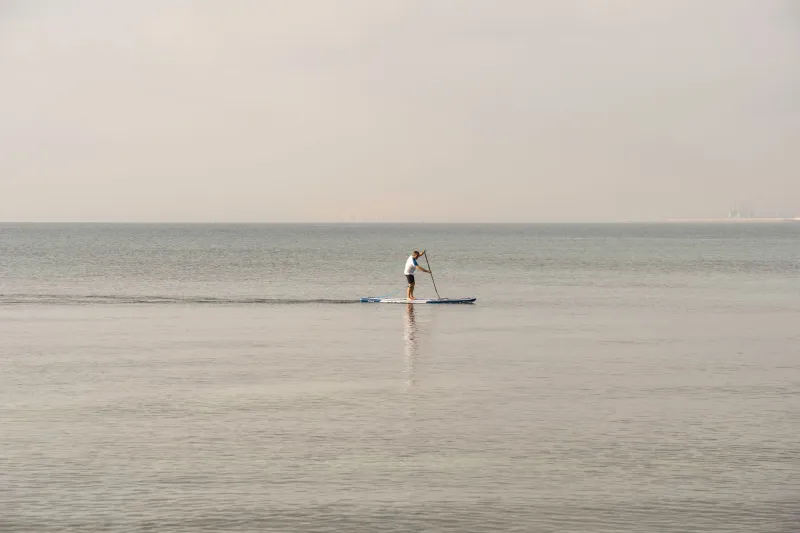
The group paddle has its place. The laughs, the shared lunch on a sandbar, the collective groan when someone falls in. But ask experienced paddleboarders about their most meaningful time on the water and a surprising number of them will describe a morning they went out completely alone.
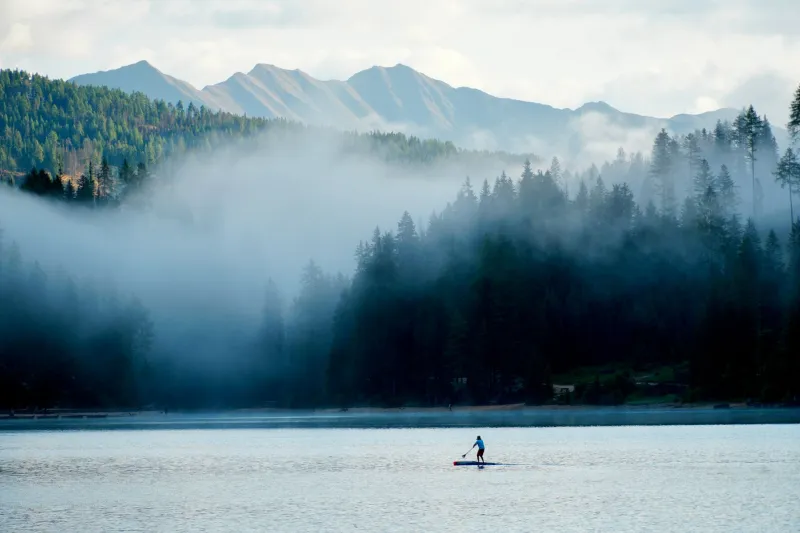
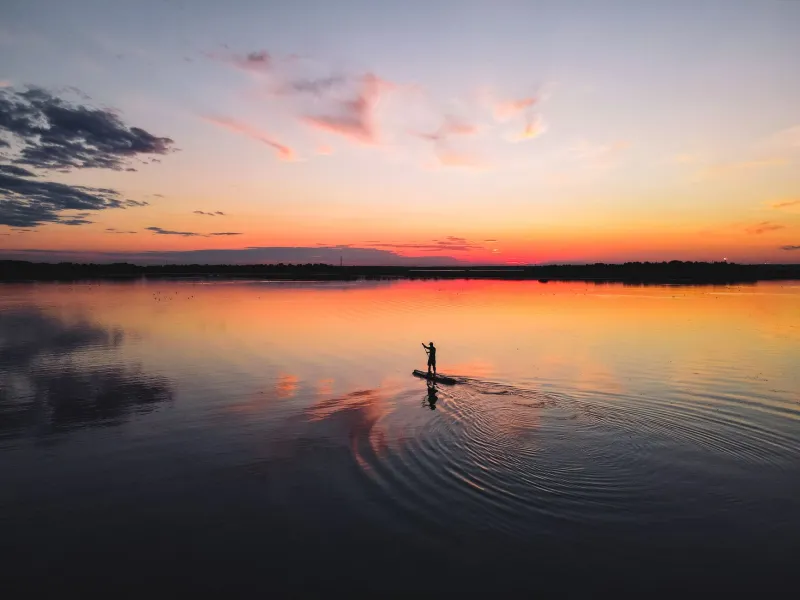
No pace to match. No conversation to manage. Just the sound of the blade entering the water and the particular kind of quiet that only exists when you're moving through nature by your own effort.
Solo paddleboarding is growing—not as an organized movement, but as a personal practice. And the people doing it will tell you it's not the same sport as group SUP. It's something different entirely.
The Pull Toward Solitude
Nadia Okafor, a physical therapist based in Asheville, North Carolina, started paddleboarding with a weekend crew three years ago. She loved it. But after a while, she started sneaking out alone on Tuesday mornings before her first appointment.
"With the group, I was always half-present," she says. "Checking in with people, making sure nobody was struggling, keeping the energy up. Alone, I could just be on the water. My brain would finally stop running its list."
Her experience lines up with what researchers have been documenting for years. Intentional solitude—choosing to be alone rather than being isolated involuntarily—is associated with improved mood regulation, reduced cognitive load, and a stronger sense of self-direction. A 2019 study published in the Journal of Personality found that people who voluntarily sought solitude reported higher levels of positive affect and creativity afterward, even when the alone time felt uncomfortable at first.
Apply that to paddleboarding and the effect seems to amplify. You're not just sitting quietly. You're moving through an environment that demands low-level focus—reading the water, adjusting your balance, navigating your line. That gentle engagement keeps the mind from spinning out while still allowing the deeper background processing that solitude enables.
How Solo SUP Differs From Other Solo Water Sports
It's worth asking: what makes solo paddleboarding distinct from, say, solo kayaking or open-water swimming? The answer has a lot to do with posture and perspective.
On a SUP board, you're standing. You're elevated above the surface, which means you see more—wildlife, weather approaching from a distance, the full panorama of wherever you are. That visual openness creates a specific kind of expansiveness that paddlers describe as hard to replicate sitting down in a kayak cockpit.
There's also the physical engagement. Paddleboarding demands constant micro-adjustments from your core, legs, and feet. You can't zone out entirely the way you might in a kayak or on a trail. That sustained, low-intensity body awareness—what sports psychologists sometimes call "embodied presence"—may be part of why solo SUP feels so restorative. Your nervous system gets a break from abstract thought because your body keeps it gently occupied.
Dr. Priya Mehta, a sports psychologist who works with endurance athletes in the Pacific Northwest, describes it as "moving meditation with stakes." "The balance requirement keeps you honest," she says. "You can't fully dissociate. And that tether to the present moment is exactly what a lot of people are chasing when they talk about mindfulness."
The Part Nobody Talks About: Managing the Risk
Here's the honest part. Solo paddleboarding carries real risks that group paddling distributes across multiple people. If you fall and hit your head, nobody's there. If conditions change faster than expected, there's no one to help you make a decision. That's not a reason to stay on shore—but it is a reason to go prepared.
Experienced solo paddlers treat safety as a non-negotiable practice, not an afterthought. A few principles worth building into your routine:
Always wear your leash. This is especially critical when paddling alone. If you fall and your board drifts, your leash is the only thing keeping you connected to your flotation device. In flat water, use a coiled leash. In moving water or surf, use a quick-release system.
Tell someone your plan. Before every solo session, text a friend or family member your put-in location, your intended route, and your expected return time. Ask them to check in if they haven't heard from you by a specific time. This is simple, takes 30 seconds, and has saved lives.
Carry a communication device. A waterproof phone case is a start, but a dedicated personal locator beacon (PLB) or a satellite communicator like a Garmin inReach is worth the investment if you paddle remote waters regularly.
Read conditions conservatively. Without a group to help you gauge whether conditions are manageable, you need to be your own voice of reason. If you're second-guessing it, don't go. The water will be there next week.
Know your exit points. Before you push off, identify two or three spots along your route where you could safely get off the water if needed. Mental preparation costs nothing and pays off fast.
What Paddlers Actually Find Out There
Ask solo paddlers what keeps them going back and the answers get interesting fast. Some talk about problem-solving—that paddling alone forces them to make every decision themselves, which builds a quiet confidence that carries into the rest of their lives. Others describe it as the only time they feel genuinely unreachable, in the best possible sense.
Nadia Okafor, who now paddles solo at least twice a week, frames it in terms of identity. "Out there, I'm not a therapist, I'm not a daughter, I'm not anybody's resource. I'm just a person moving through water. That's it. And I come back feeling more like myself than almost anything else I do."
That might be the most honest advertisement for solo SUP there is. Not that it's safer than group paddling, or easier, or more impressive. Just that it gives you something back that the noise of daily life has a tendency to take—a few hours of being fully, quietly, unmistakably yourself.
The board is waiting. The water doesn't care if you bring a crowd.
Sometimes the best paddle is the one you take alone.