Hidden in Plain Sight: The Fin Setup That Could Change Everything About How You Paddle
You've dialed in your stroke. You've got the right board for your weight. You even splurged on a carbon paddle. But every session still feels a little off — tracking sideways, struggling through choppy water, or just lacking that locked-in feeling when you really dig in.
Here's a question most paddlers never think to ask: when did you last look at what's happening underneath your board?
Fins are the quiet workhorses of stand-up paddleboarding. They don't get the Instagram treatment. Nobody's posting slow-motion footage of their fin box configuration. But ask any serious paddler, board shaper, or SUP coach what separates a frustrating session from a flow-state one, and fins come up — fast.
Why Fins Get Ignored
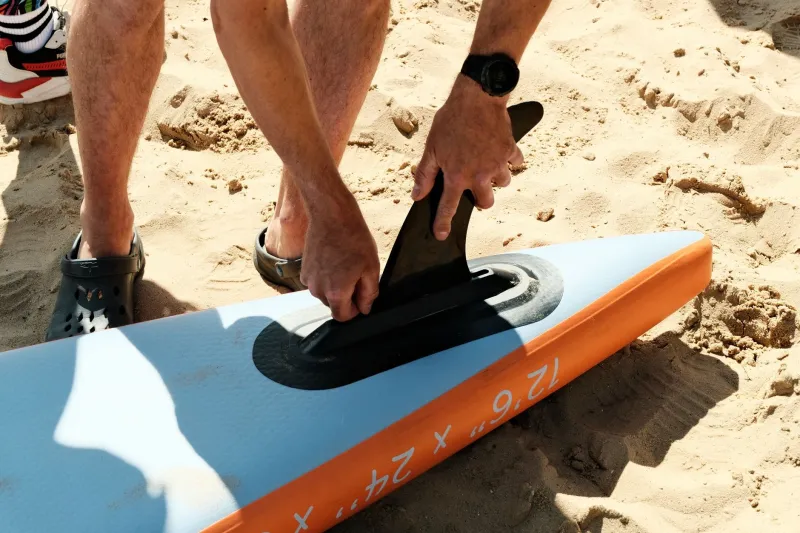
Part of the problem is visibility. Fins live underwater, out of sight and mostly out of mind. Most entry-level boards ship with a single center fin that gets popped in during setup and promptly forgotten. For beginners still figuring out balance and forward stroke, that's fine. But as paddlers level up, that default configuration starts to quietly hold them back.
"People will spend $400 upgrading their paddle before they'll spend $40 experimenting with fins," says Marcus Delray, a board designer based out of Sarasota, Florida, who's been shaping SUP and surf-style boards for over a decade. "It's the lowest-cost, highest-impact variable on the board, and it's almost universally overlooked."
Delray's frustration is understandable. He's watched customers struggle with tracking issues, instability in chop, or sluggish turns — problems that a fin swap could fix in fifteen minutes — while instead they blame their board or their technique.
The Basics: What Fins Actually Do
At its core, a fin does two things: it provides directional stability (tracking) and it influences how the board pivots and turns. Change the fin, and you change the relationship between those two forces.
A larger fin creates more drag and resistance, which means better straight-line tracking — ideal for flatwater touring or distance paddling. A smaller fin reduces drag and loosens the feel, making the board more responsive for surf-style riding or technical maneuvering. Fin placement matters too. A fin positioned further back in the box tends to increase tracking; moving it forward loosens things up.
Then there's the question of configuration. Single fin, twin fin, thruster (three fins), quad — each setup creates a distinctly different ride.
"A single center fin is your workhorse for flatwater," explains Delray. "Add side bites — those small side fins — and you start getting lateral hold and a livelier feel. Go full thruster and you're in surf territory: responsive, grippy, built for reading and reacting to wave energy."
Real Paddlers, Real Breakthroughs
Jamie Okonkwo paddles out of Lake Tahoe and spent two seasons fighting her board on anything but glassy water. "I thought I just needed to get stronger," she says. "My coach finally looked at my fin setup and basically laughed — I had a big touring fin on a board that was designed to run a thruster. No wonder it felt like I was dragging an anchor through chop."
After switching to a properly sized thruster setup, Okonkwo says the difference was immediate. "It wasn't even subtle. The board felt alive. I stopped fighting it and started working with it."
For Tyler Brenham, a river SUP paddler based in Asheville, North Carolina, the revelation came from going smaller. "River paddling is all about quick pivots and reading obstacles fast. I was running a fin way too big for that environment. Dropped down to a small, flexible fin and suddenly I could spin the board on a dime. It was like unlocking a completely different discipline."
Material Matters More Than You'd Think
Beyond size and configuration, fin material plays a role that most paddlers don't consider. Stiff fins — typically fiberglass or carbon — transmit energy directly and offer precise, predictable response. Flexible fins, often made from softer plastics or rubber composites, absorb chop and provide a more forgiving, fluid feel.
"For someone paddling technical flatwater or racing, stiffness is your friend," says Delray. "For someone doing yoga SUP or recreational cruising, a little flex in the fin actually smooths out the ride and reduces fatigue over a long session."
This is the kind of nuance that doesn't make it into beginner guides — but it's the stuff that separates paddlers who plateau from those who keep progressing.
How to Start Experimenting
The good news: fins are cheap to experiment with relative to almost any other gear upgrade. A quality aftermarket fin runs anywhere from $20 to $80, and most modern boards use standardized fin boxes (US box, Futures, or FCS) that accept a wide range of compatible fins.
Here's a simple framework for dialing in your setup:
For flatwater touring and distance: Start with a single center fin in the 9-to-10-inch range. Prioritize stiffness and a longer base for maximum tracking efficiency.
For recreational paddling in light chop: Try a smaller center fin (7 to 8 inches) with small side fins. You'll sacrifice a little tracking precision but gain stability and maneuverability.
For surf or downwind conditions: Go thruster or quad. Smaller fins, more lateral hold, and a setup that rewards dynamic movement and weight shifting.
For rivers and technical water: Think small and flexible. You want pivot, not tracking. A short, swept-back fin in a softer material will serve you far better than anything designed for open water.
And here's the most important tip: paddle the same stretch of water before and after a fin change. Variables like wind and current can mask the difference. Same spot, same conditions — that's when you'll really feel what changed.
The Bigger Picture
There's something philosophically satisfying about fins as a topic. They're invisible, underappreciated, and wildly effective — a lot like some of the best things in paddling culture. The paddler who's quietly logging 15-mile sessions before work. The small-town lake that nobody's mapped yet. The technique adjustment that costs nothing and fixes everything.
Fins fit that mold perfectly. No sponsorship deal, no glossy product launch, no social media campaign. Just a piece of shaped material doing its quiet, essential work beneath the surface.
Next time you're prepping for a session, flip the board over before you hit the water. Take a look at what's down there. Ask yourself whether that fin — the size, the material, the position — actually matches what you're trying to do out on the water.
Chances are, it doesn't. And chances are, changing it will be the best fifteen minutes you've invested in your paddling all season.