Stop Chasing the Perfect Paddle and Watch What Happens
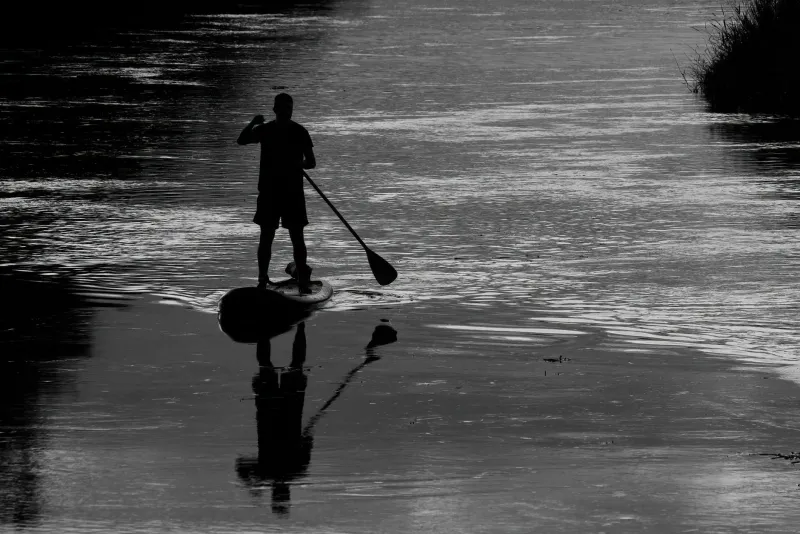
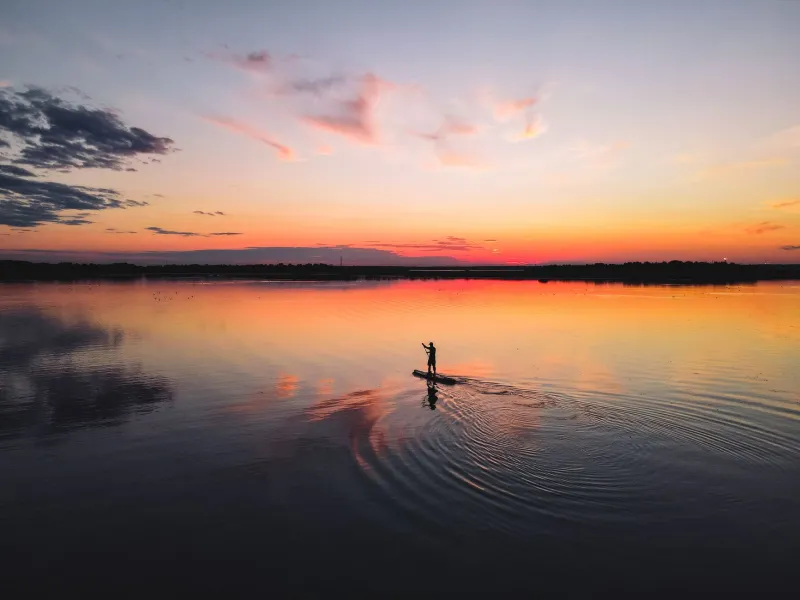
There's a moment most paddlers know but rarely talk about. You're somewhere out on the water — maybe a glassy lake at dawn, maybe a slow-moving river with nobody else around — and without really planning for it, everything just clicks. Your strokes feel effortless. Your balance stops being something you think about. The noise in your head goes quiet. Time does that weird thing where it stretches and compresses at once.
Then your brain catches up and ruins it: Wow, I'm really in the zone right now. And just like that, it's gone.
Welcome to the paddle paradox.
What's Actually Happening Out There
Sports psychologists have a name for what you just experienced — and lost. It's called flow state, a term coined by psychologist Mihaly Csikszentmihalyi back in the 1970s. In simple terms, flow is a mental state of full immersion in an activity, where the challenge of what you're doing perfectly matches your current skill level. You're not bored. You're not overwhelmed. You're just in it.
On a paddleboard, the conditions for flow are almost absurdly good. The repetitive rhythm of the stroke, the constant micro-adjustments your body makes to stay balanced, the sensory input of water and wind — all of it pulls your attention into the present moment in a way that's hard to manufacture in a gym or on a trail.
"Paddleboarding is one of the more naturally flow-inducing activities I've seen clients describe," says Dr. Renata Voss, a sport and performance psychologist based in Asheville, North Carolina, who works with endurance athletes and outdoor sports enthusiasts. "The environment does a lot of the work. The problem is that people come to the water with a training mindset — splits, distance, heart rate zones — and they accidentally override the very thing that makes the sport feel so good."
The Goal-Setting Trap
Here's the irony: the habits that make you better in most athletic pursuits can actively work against you on a paddleboard.
Goal-setting, performance tracking, structured intervals — these are legitimate tools for building fitness and improving technique. But they also pull your attention away from the present and into a kind of internal scoreboard. You stop experiencing the water and start evaluating yourself against it.
Mike Tran, a flat-water paddler from Austin, Texas, who's been on a board for going on eight years, says he spent his first three years treating every session like a test. "I had a GPS watch, a training log, weekly mileage goals. I was always comparing this paddle to the last one. And I was getting better, technically. But I wasn't enjoying it the way I did when I first started."
The shift came during a trip to Barton Creek Greenbelt, where Tran left his watch in the car on a whim. "I didn't know how far I went or how long I was out. And it was the best session I'd had in years. Something just opened up."
What opened up, according to Dr. Voss, was his attentional focus. "When you remove the external metrics, you stop narrating your performance and start actually having it. That's when flow becomes accessible."
Why SUP Is Different
Not every sport lends itself to this kind of experience. Running can get there, and so can surfing and cycling — but paddleboarding has a few unique qualities that make it especially fertile ground for the flow state.
First, there's the surface. Water is inherently unpredictable in ways that demand constant, low-level responsiveness. Unlike a treadmill or a track, a paddleboard session never fully repeats itself. That dynamic environment keeps your nervous system engaged without tipping into anxiety.
Second, there's the silence. Even in a busy public lake, you're moving through space in a way that feels removed from the noise of regular life. There's no engine, no traffic, no crowd noise. The sensory environment is stripped down in a way that makes presence easier.
Third — and this one's underappreciated — there's the standing position itself. Being upright on moving water activates your proprioceptive system in a continuous, subtle way. Your body is always slightly "working" even when you're gliding. That low-level physical engagement seems to quiet the default mode network in the brain — the part responsible for rumination, self-criticism, and the mental chatter that keeps most of us out of the present moment.
"I've had clients describe paddleboarding as the first time they've felt truly calm in years," says Dr. Voss. "And almost universally, it happened on a session where they weren't trying to accomplish anything specific."
How to Get Out of Your Own Way
So if the goal is to stop goal-setting, how do you actually do that? It sounds simple, but for anyone who's built their athletic life around metrics and milestones, it takes real practice.
A few things that experienced paddlers swear by:
Leave the device on shore. Or at least leave it in your pocket. You don't have to throw your GPS watch in the lake — just don't look at it. Give yourself one session a week that's completely off the record.
Pick a sensory anchor. Instead of thinking about your stroke rate or your posture, pick one thing to notice — the sound of your paddle entering the water, the way the light hits the surface, the temperature of the air on your forearms. When your mind wanders to performance, come back to the anchor.
Paddle somewhere new. Familiar routes are comfortable, but they're also mental autopilot. A new stretch of water forces genuine attention because you're actually navigating, not just executing a memorized course.
Build in unstructured time. If you normally paddle for an hour with a plan, try adding 15 minutes at the end where you have absolutely no agenda. Drift. Explore. Turn around for no reason. Let the water decide.
"The paradox resolves itself pretty quickly once you stop fighting it," says Tran. "Your best sessions aren't the ones you planned hardest. They're the ones where you showed up and let the water do what it does."
The Performance Upside (Yes, Really)
Here's the kicker: regularly accessing flow state doesn't just feel better — it actually makes you a better paddler. Research on flow in athletic performance consistently shows that athletes who can enter flow states more readily demonstrate improved timing, better movement economy, and faster skill integration.
In other words, the sessions where you stop trying to improve are often the ones where you improve the most.
Dr. Voss puts it plainly: "The brain consolidates motor patterns most effectively when it's not under evaluative pressure. Relaxed attention and genuine engagement are neurologically optimal for skill development. Letting go isn't the opposite of training — it is training, just a different kind."
So the next time you hit the water, maybe leave the metrics for another day. Don't track the miles. Don't time the intervals. Just paddle until you forget you're paddling.
That's when the good stuff happens.