When Winning Gets in the Way: How Chasing Progress Stole the Magic from SUP
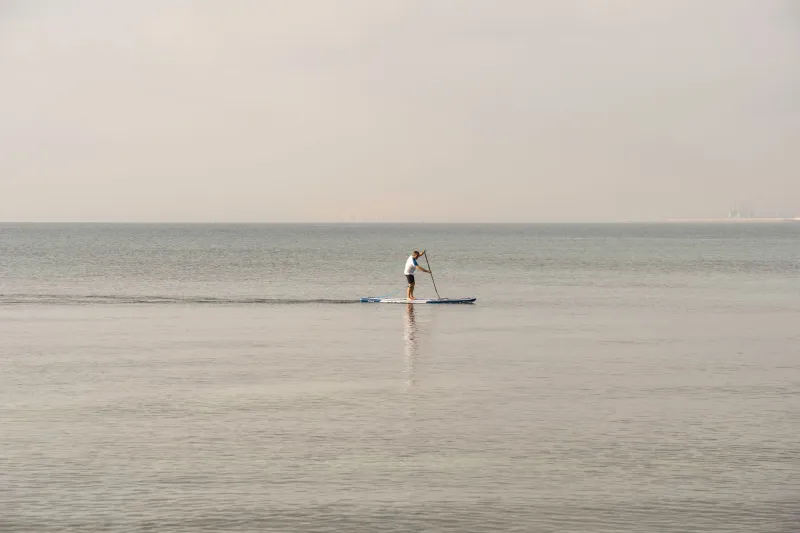
Ask anyone why they first stepped onto a paddleboard and you'll hear variations of the same answer. The water looked good. A friend had a board. It seemed like a fun thing to do on a Saturday afternoon. Nobody mentions stroke rate or hull efficiency or race splits. Nobody's thinking about VO2 max out there on their first wobbly attempt to stay upright.
So how does something that starts so freely — so joyfully, honestly — turn into a source of stress?
For a lot of paddlers, it happens gradually. You get better. You buy a better board. You start following coaches on Instagram. You download an app that tracks your pace. And somewhere in that process, the Saturday afternoon vibe evaporates, replaced by something that feels suspiciously like work.
This isn't a niche problem. It's got a name in sports psychology circles — the performance trap — and paddleboarding, with its growing race scene and increasingly technical coaching culture, has become fertile ground for it.
The Upgrade Spiral
It usually starts with gear. Your first board was probably an inflatable rental or a wide, forgiving all-rounder. You fell off constantly and laughed about it. Then you got your own board, and the falls became less funny — they became data points. Evidence of something to fix.
You upgraded to a narrower race board. You started watching your GPS splits. You joined a club with structured training sessions. All of this is genuinely great for your paddling. Your technique sharpens. Your endurance builds. You can cover water in ways that would have seemed impossible a year ago.
But here's the paradox: the better you get, the more you have to lose. Beginners have nothing to protect. They're just out there splashing around. Advanced paddlers carry an invisible weight — the identity of being a serious paddler — and that weight can make every session feel like a performance review.
"I used to paddle and just... look at stuff," says one paddler from the Pacific Northwest who asked not to be named. "Birds, clouds, the way the light hit the water. Now I'm staring at my watch the whole time. I don't even know when that switch happened."
The Comparison Trap
Social media deserves some of the credit here, and not the good kind. The SUP community online is genuinely inspiring — jaw-dropping destinations, incredible athletes, hard-won race victories. But it also creates a perpetual highlight reel that's almost impossible not to measure yourself against.
You finish a solid ten-mile paddle feeling proud, then you scroll past someone who just completed a downwind run from Molokai. Your solid session suddenly feels small. You start wondering if you're training hard enough, paddling far enough, racing often enough.
This kind of comparison culture hits intermediate paddlers especially hard. Beginners don't have the vocabulary yet to feel inadequate. Elite athletes have usually made peace with where they sit in the hierarchy. But the middle ground — the paddlers who are skilled enough to know what great looks like but not quite there yet — is a psychologically tricky place to live.
What Coaches Are Noticing
Instructors and coaches across the country are starting to see this pattern play out in real time. Students who once showed up excited and open-minded arrive to lessons tense and self-critical. They apologize for mistakes before they've even made them. They ask about optimal stroke mechanics before they've found a comfortable stance.
The irony is that this kind of mental tightness actually slows progress. Relaxed, playful practice produces better motor learning than anxious, performance-focused drilling. The beginner who's genuinely curious and unafraid to look silly often improves faster than the intermediate paddler who's trying hard not to look bad.
Some coaches are responding by deliberately building "unstructured" time into sessions — periods where athletes are explicitly told to just mess around. Try surfing a small wake. Paddle backward. See if you can spin the board in a circle. No metrics, no feedback, no goals.
The results, anecdotally, are striking. People laugh more. They try things they'd never attempt during a "real" session. And often, they accidentally discover something useful about their paddling in the process.
The Intentional Reset
A growing number of experienced paddlers are going a step further and deliberately engineering what they call "beginner sessions" — outings where all performance expectations are explicitly left on the dock.
No GPS watch. No stroke counting. No comparing times to last week. Just a board, some water, and a commitment to treating the session like it's the first time.
Some paddlers do this by switching equipment — grabbing a wider, more forgiving board than they normally ride, or borrowing a friend's inflatable for a mellow flat-water float. Removing the tool that enables high performance also removes the pressure to perform.
Others change locations. If you've trained on the same stretch of river or bay for two years, every paddle there is loaded with history and expectation. Showing up somewhere new — a lake you've never paddled, a coastal section you don't know — forces a kind of natural beginner's attention. You're genuinely curious because you genuinely don't know what's coming.
"I drove three hours to paddle a reservoir I'd never seen before," says a competitive racer from the Southeast. "Didn't bring my race board. Just my old inflatable and a sandwich. It was the best paddle I'd had in maybe two years. I didn't beat any of my times. I didn't try to."
Finding the Balance
None of this is an argument against improvement. Getting better at SUP is genuinely satisfying, and the technical depth of the sport — the interplay of balance, power, timing, and water reading — is part of what makes it so compelling over the long haul. There's real joy in the craft of paddling well.
But craft and obsession aren't the same thing. And the data-driven, comparison-fueled version of paddleboarding that a lot of serious athletes have drifted into can quietly hollow out the experience until it becomes another obligation on the weekly schedule rather than the reason you got up early.
The paddlers who seem to navigate this best are the ones who can hold two things at once: genuine commitment to improving their skills and genuine permission to sometimes just be out there for the sake of being out there.
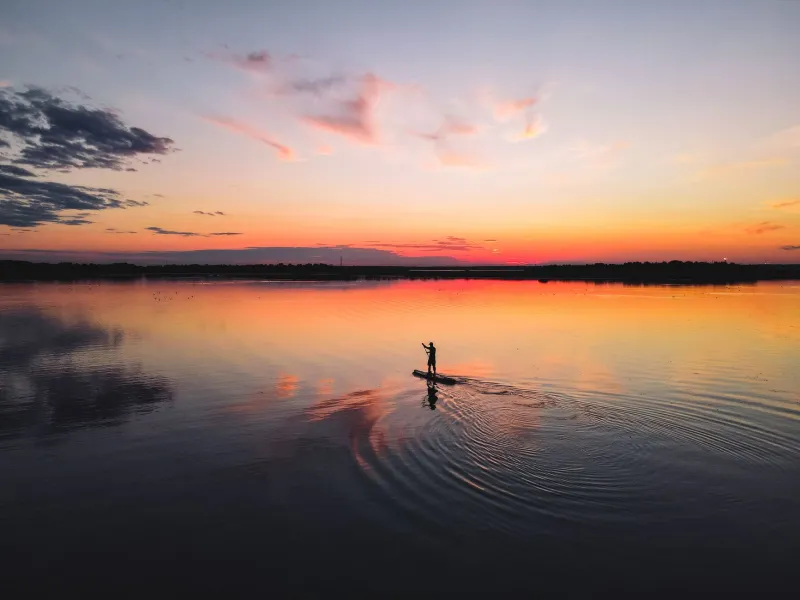
The water doesn't care about your split times. The heron standing on that log downstream isn't judging your stroke. The feeling of a board moving under your feet — that subtle, alive sensation that made you fall for this sport in the first place — is still there every single session, if you remember to notice it.
Maybe the most advanced thing a serious paddler can do is learn to be a beginner again.