Pack It, Paddle It, Repeat: The Real Guide to Taking Your SUP Everywhere
There's a certain kind of paddler who can't stay put. They're already scanning water conditions on Google Maps while their last session is still drying off the deck pad. They book flights the way most people book dinner reservations — around the water, not the other way around. If that sounds like you, welcome to the SUP nomad life. And if you're just getting started with travel-focused paddling, buckle up, because there's more to it than tossing a board in the back of a truck.
Let's get into the real stuff: how to actually move your board across the country without losing your mind — or your fin box.
The Gear Question: Inflatable vs. Hard Board for Travel
This is where most conversations about SUP travel should start, and honestly, the answer is pretty clear: if you're flying, an inflatable is your best friend. A quality iSUP rolls down into a backpack-style bag that fits into checked luggage (usually around 30–40 lbs), and airlines treat it like any other oversized bag. You'll typically pay a standard oversize fee — around $30–$100 depending on the carrier — which beats renting a mediocre board at your destination every single time.
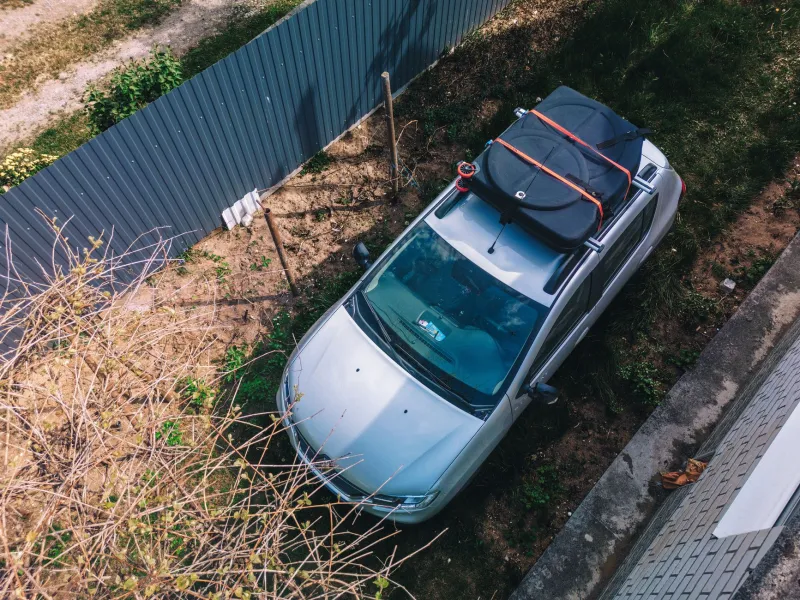
That said, not every SUP traveler is willing to give up the feel of a hard board. For road trips, a quality roof rack system changes the game. Brands like Yakima and Thule make crossbar setups that can safely carry a 12-foot touring board at highway speeds. Foam block carriers work in a pinch but aren't ideal for long hauls — invest in cam straps and a proper rack if you're serious about it.
Jess Morales, a San Diego-based paddler who logs roughly 15 travel sessions a year, puts it simply: "I kept my hard board for home and bought a second inflatable specifically for travel. The iSUP I take everywhere performs about 85% as well as my hard board, and I never stress about it getting dinged in baggage claim."
Flying with Your Board: What You Actually Need to Know
Despite what the internet will tell you, TSA doesn't have a specific prohibition on paddleboards or most paddling accessories. Your board bag itself isn't an issue. The things that can get flagged? CO2 inflation cartridges (prohibited in carry-on and checked bags), certain adhesives used for fin repairs, and leash attachments with metal hardware that can look suspicious on an X-ray.
A few practical moves before you hit the airport:
- Deflate completely and roll your iSUP tight — you want zero pressure in the bladder.
- Disassemble your paddle and pack it lengthwise. Most three-piece paddles fit neatly inside your board bag.
- Leave the pump in checked baggage — hand pumps are fine, just bulky.
- Remove fins and pack them in a separate padded pouch. Lost fins are the most common travel casualty.
- Check your airline's oversize policy before you get to the counter. Delta, Southwest, and American all handle oversized sports equipment slightly differently.
Call ahead if you're unsure. Seriously — a two-minute phone call to the airline can save you a $200 surprise fee at the counter.
Road-Tripping with Your SUP: The Freedom Formula
For a lot of American paddlers, the best SUP travel happens on four wheels. The US is genuinely stacked with incredible flat water, whitewater, and coastal access if you're willing to drive to find it. The Snake River in Idaho, the Boundary Waters in Minnesota, the Green River in Utah — none of these require a plane ticket.
The road trip SUP lifestyle has its own rhythm. You're chasing water reports the way surfers chase swell forecasts. Apps like Windy, PaddleGuru, and local Facebook groups for regional paddling clubs are your best intelligence sources. Wind is the enemy of a good session, so learning to read morning conditions and paddle early is something every road-tripper figures out fast.
Mike Chen, who drove from Portland to Moab last summer with two boards strapped to his Subaru, says the planning mindset is half the experience. "You start thinking about every body of water differently when you're traveling with a board. That lake you pass on the highway? You're already wondering what the launch situation looks like."
Finding Water at Your Destination
Showing up somewhere new and finding a great put-in is a skill. Here's what actually works:
Paddling clubs and local shops are the single best resource. Walk into a local paddle shop and ask where the regulars go — you'll get honest, current intel that no travel blog can match. Most paddling communities are welcoming to visiting paddlers.
AllTrails and Paddling.com both have water access databases that include launch points, parking info, and user reviews. Cross-reference these with satellite imagery on Google Maps to get a feel for the shoreline before you commit.
State park websites are underrated. Many state parks with water access publish seasonal condition reports and list designated launch areas. Some even have permit requirements, especially in wilderness areas — don't skip this step.
Ask the locals. This sounds obvious but it's genuinely underused. If you're staying at a campground near water, the camp host almost always knows the best spots.
The Mindset of the SUP Nomad
Here's what separates casual paddlers who travel from true SUP nomads: the water comes first. Not the hotel, not the Instagram shot, not the tourist checklist. The water.
That means accepting that sometimes conditions aren't right and you skip a session. It means building flexibility into your itinerary so you can stay an extra day when the morning glass is perfect. It means traveling lighter in every other aspect of your trip so the board and gear don't feel like a burden.
The community around this lifestyle is real and growing. SUP-specific travel groups on Reddit and Facebook connect paddlers who swap destination tips, gear recommendations, and even board rentals between travelers. There's a generosity to the culture — people who love paddling tend to want other paddlers to have great experiences.
If you're ready to commit to the nomad approach, start small. Pick a destination within driving distance, strap the board to the car, and go find some water you've never paddled before. The logistics get easier every time. The stoke doesn't.
Ride the current — just make sure you've got a good roof rack.