Paddle Season, Repeat: How SUP Nomads Are Mapping Their Lives Around America's Best Water
Somewhere around mile three of a glassy morning paddle on Florida's Emerald Coast, Marcus Reilly realized he had a problem. Not a bad one — the kind where you look back at your old life and genuinely can't explain why you waited so long to leave it.
"I was on a Zoom call from a kayak launch in Destin, headphones in, laptop propped on a cooler," he laughs. "My client had no idea. And I thought — why would I ever go back to doing this from an apartment in Denver?"
Marcus is a freelance UX designer. He is also, depending on the month, a Gulf Coast flat-water regular, a Tennessee River paddler, and a Lake Tahoe summer convert. He doesn't have a home base anymore. He has a paddle calendar.
He's not alone. Across the country, a quietly growing community of remote workers, freelancers, and small business owners are doing something that would've seemed eccentric a decade ago: structuring their entire year around prime paddling conditions in different American regions. They call themselves SUP nomads, water chasers, or sometimes just "people who finally got it right."
The Seasonal Map That Changes Everything
The genius of the SUP nomad lifestyle, if you can call it that, is that America's geography basically hands you a ready-made rotation. The country's waterways don't all peak at the same time — and that's the whole point.
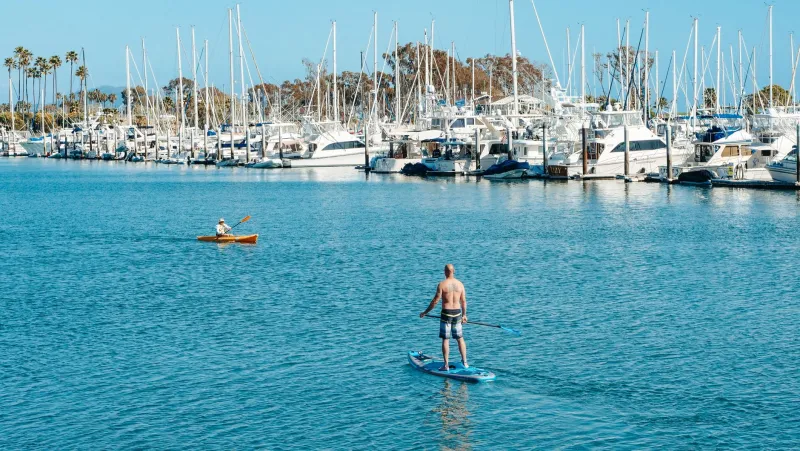
Winter through early spring? The Gulf Coast delivers. Places like the Florida Panhandle, the Texas bays around Corpus Christi, and the calm tidal flats of coastal Georgia offer warm-enough air, minimal chop, and crowds that haven't arrived yet. Flat-water conditions are almost embarrassingly good from November through March.
As temperatures climb, the Southeast interior opens up — the Tennessee River lakes, the Ozark reservoirs, the Carolina piedmont. Spring runoff settles, water clears, and you've got a window before the summer heat turns everything into a sauna.
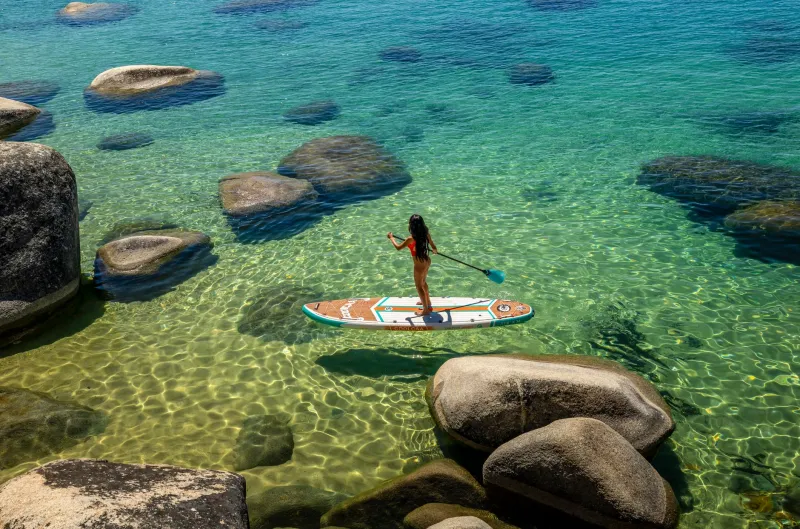
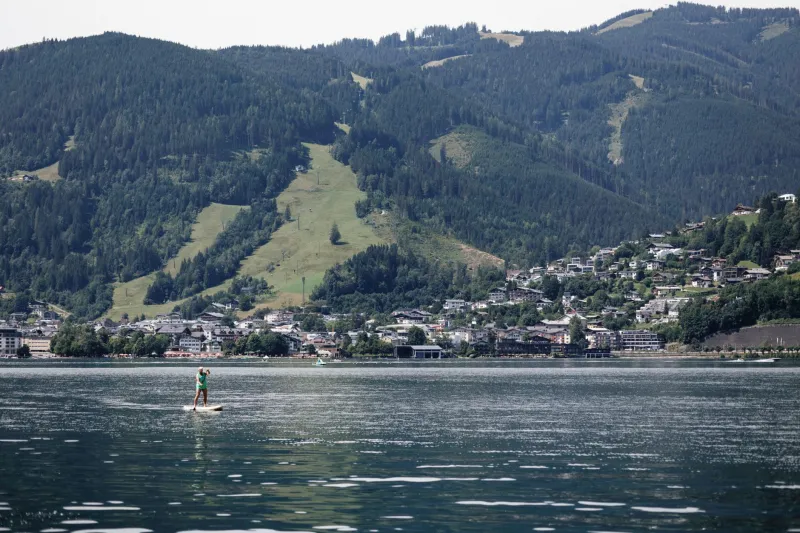
Summer belongs to the mountains and the North. Colorado's high-altitude reservoirs, the Boundary Waters, Lake Tahoe, Montana's Flathead Lake — these places hit their stride from June through September, offering cooler temps and the kind of alpine scenery that makes a paddling photo look almost too good to be real.
Fall? The Pacific Northwest wakes up before the serious rain arrives. The Columbia River Gorge, Puget Sound on a calm morning, the coastal estuaries of Oregon — September and October can be genuinely spectacular before the gray sets in.
String those together and you've got a year-round paddling life without ever leaving the continental US.
The Logistics Are Real (But Manageable)
It sounds romantic. It mostly is. But SUP nomads are quick to tell you the lifestyle demands real planning, and the details matter.
Gear transport is usually the first headache. Full-size hard boards are a nightmare to travel with repeatedly, which is why most nomads have gone deep on inflatable SUPs. Modern inflatables from brands like Red Paddle Co, iROCKER, and Starboard have closed the performance gap considerably, and a quality board rolls into a travel bag that fits in an SUV or checks as oversized luggage. A few nomads ship boards ahead via freight services when they're making a big regional jump — it costs more, but it beats roof-rack anxiety on a three-day drive.
Internet reliability is the other non-negotiable. Starlink has quietly become the most-mentioned piece of gear in SUP nomad circles, especially for remote lake destinations where cell coverage disappears. Several nomads described it as the single technology that made the lifestyle truly viable. For more populated coastal areas, a solid hotspot plan from a major carrier usually handles it, but having a backup matters when your income depends on connectivity.
Rental markets offer a useful release valve. In popular paddle destinations, seasonal rentals — monthly furnished apartments, vacation rentals booked for 30-60 day stretches — are increasingly common and often cheaper per night than people expect when booked with lead time. Apps like Furnished Finder and mid-term rental listings on Airbnb have made this dramatically easier than it was even five years ago.
Jess Torrance, a copywriter who's been living nomadically for three years, keeps a shared spreadsheet with four other nomads tracking rental availability, launch access, and WiFi quality at their rotation spots. "We're basically crowdsourcing the infrastructure research," she says. "Someone scoped out the best coworking space in Traverse City so I didn't have to."
What the Water Actually Does to Your Work
Ask any SUP nomad about productivity and you'll get a version of the same answer: the paddle doesn't compete with the work. It feeds it.
"I do my best thinking on the water," says Derek Okafor, a software consultant who paddles before his first call every morning regardless of where he's based. "I show up to my desk with my head clear in a way that never happened when I was commuting. The board is basically my commute now."
There's something about the rhythm of paddling — the bilateral movement, the required balance, the sensory input of open water — that seems to function as a genuine cognitive reset. Researchers studying outdoor activity and focus have pointed to similar mechanisms in other movement-based practices, and SUP nomads will tell you they've run their own informal experiment with a sample size of thousands of mornings.
The culture shift runs deeper than productivity, though. Several nomads described a fundamental change in how they relate to geography — a loosening of the idea that "home" is a fixed coordinate.
"I used to think about vacations as escapes from real life," Marcus says. "Now I think about real life as the thing I built around the places I actually want to be. The water came first. Everything else got arranged around it."
Finding Your People on the Move
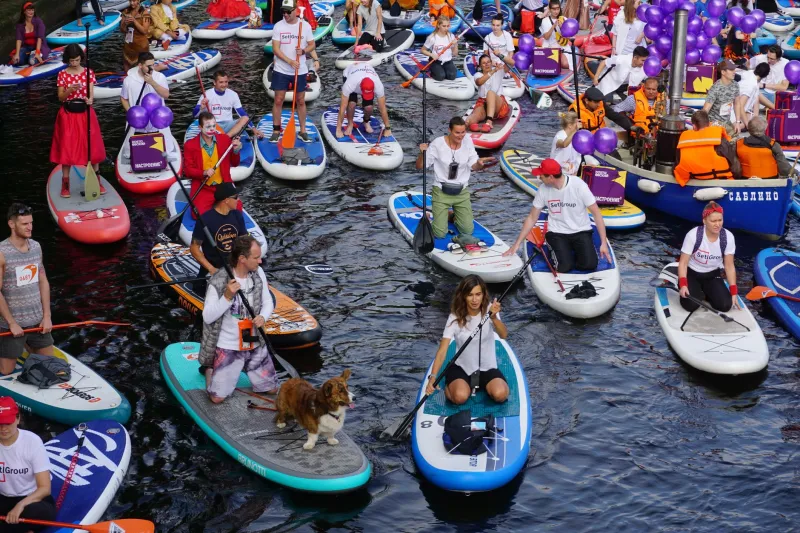
One thing that surprises new SUP nomads is how quickly community forms around shared water. Local paddle clubs, outfitter shop regulars, dawn patrol crews at public launches — there's a social infrastructure to paddling culture that makes it easier to plug in as a temporary resident than you might expect.
Jess describes showing up in a new town and hitting a local SUP meetup within the first week as standard practice. "You meet the regulars, you find out where the good launches are, who rents storage space, which coffee spot has the best post-paddle vibes. It accelerates the whole getting-settled process."
Online communities have formalized this a bit — Facebook groups for regional paddling communities, SUP forums where nomads trade spot recommendations and seasonal timing advice. The information-sharing culture in paddling is genuinely generous, which helps.
Is It for Everyone?
Honestly? No. SUP nomadism requires remote income, high tolerance for logistical friction, and a willingness to prioritize experiences over stability in the conventional sense. It's not a budget lifestyle either — quality gear, mid-term rentals, and travel costs add up.
But for a certain kind of person — someone who already lives for the water, who's realized that a paddle session isn't a reward for finishing work but a fundamental part of what makes the work worth doing — the math starts to look different.
America has more incredible paddling water than most people will ever see in a lifetime of annual vacations. The SUP nomads have just decided to stop treating it like a highlight reel and start treating it like a schedule.
The current's always moving somewhere. Might as well follow it.