Water First, Calendar Second: How Serious Paddlers Are Redesigning Summer Life Around the Paddle
For most people, summer vacation looks like this: request the days off, book something, scramble to squeeze in as much as possible before Monday rolls back around. But a quietly growing segment of the paddleboarding community has flipped that formula entirely. Their itinerary starts with the water. Everything else — where they sleep, how they work, how long they stay — gets sorted out from there.
Call them SUP nomads. They're remote workers, freelancers, seasonal workers, and retirees who've figured out that if your board can go anywhere, maybe you can too.
Why Summer Is the Season to Rethink Everything
There's something about June through September that makes the whole country feel like a paddling map. The Great Lakes open up. Mountain reservoirs hit peak clarity. Coastal bays warm just enough to make a sunrise session genuinely comfortable. And yet most paddlers only get to experience one or two of those windows because they're tethered to a fixed location.
That's what changed for Marcus Delray, a UX designer based out of Austin who spent last summer working remotely from five different states. "I started in Michigan on Lake Superior in June, then chased conditions south through the Ozarks, hit the Outer Banks in August, and finished in the Florida panhandle in September," he says. "I worked the same hours. I just worked them from different places."
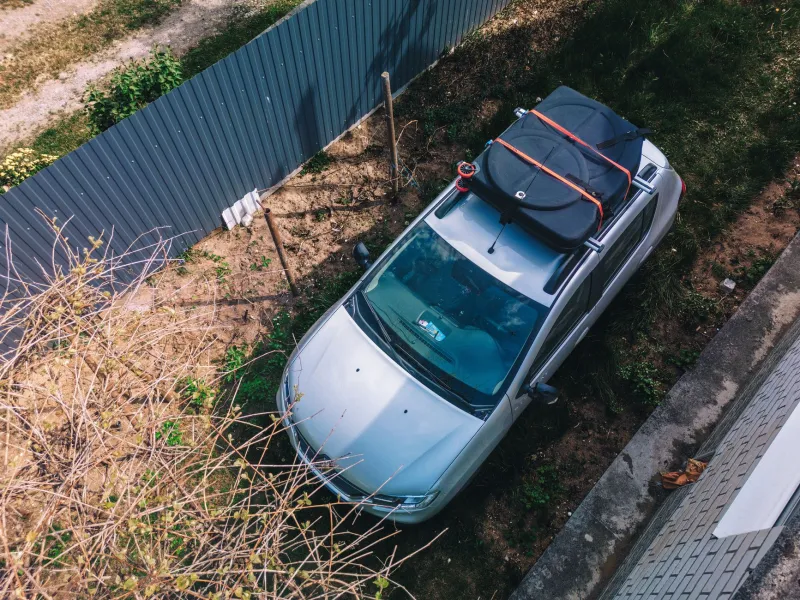
His setup wasn't complicated — a rooftop rack, an inflatable SUP, and a Starlink connection that kept him online wherever he parked. But the experience, he says, completely reframed how he thinks about both work and paddling.
Planning a Multi-State Water Route Without Losing Your Mind
The biggest misconception about the nomadic paddling lifestyle is that it requires either extreme wealth or extreme sacrifice. Neither is really true — it requires planning, flexibility, and a willingness to prioritize differently.
Here's how experienced water wanderers typically structure a summer route:
Start with the conditions calendar, not the map. Different regions peak at different times. The Pacific Northwest offers some of its best flatwater in July before afternoon winds kick up. The Mid-Atlantic coast is prime in late August when hurricane swells haven't arrived but summer crowds have thinned. The Upper Midwest lakes are glassy and gorgeous through early September. Build your timeline around those windows.
Layer in your logistics second. Once you know where you want to be and when, figure out accommodations. National forest campgrounds, state park cabins, and platforms like Hipcamp have made budget-friendly stays near water dramatically more accessible. Many paddlers mix a few splurge nights at a waterfront rental with longer stretches of dispersed camping.
Think in basecamp weeks, not single nights. Constantly moving is exhausting and expensive. The nomads who enjoy this lifestyle most tend to stay in a region for one to two weeks, explore the local paddling spots thoroughly, then relocate. It's less road trip, more slow travel.
Know your board for the conditions. An inflatable all-around board handles most of what a summer route throws at you — flatwater, mild surf, rivers with moderate current. But if you're targeting specific terrain like downwind runs or whitewater SUP, plan accordingly or look into local demo and rental options to supplement what you're carrying.
The Remote Work Factor
It's impossible to talk about the SUP nomad trend without acknowledging the shift in how Americans work. According to data from the Bureau of Labor Statistics and multiple workplace surveys, remote and hybrid arrangements remain far more common post-2020 than they were before. For paddlers, that's been a genuine lifestyle unlock.
Jenna Kowalczyk, a project manager in the healthcare tech space, negotiated a fully remote arrangement two years ago specifically with summer travel in mind. "My employer doesn't care where I'm logged in from," she says. "So in July, I'm logged in from a lake house in Vermont. In August, I'm on the Carolina coast. I paddle before my morning standup and sometimes again after I close the laptop."
She's quick to note it's not all highlight-reel moments. Connectivity can be spotty in remote areas. Time zone differences matter if your team is spread out. And there's a discipline required to actually work — not just paddle all day — that some people underestimate. "You have to be honest with yourself about whether you can actually be productive," she says. "But if you can, the payoff is insane."
The Best Regions for a SUP-Centered Summer Route
If you're building a route from scratch, here are five regions worth anchoring your summer around:
The Great Lakes (June–July): Unreal clarity, dramatic shorelines, and enough variety across five lakes to keep things interesting for weeks. Lake Superior's remote stretches are particularly special for experienced paddlers.
The Ozarks and Current River Corridor (July): Float rivers, spring-fed streams, and calm reservoir sections make this one of the most underrated SUP regions in the country.
The Outer Banks, NC (August): Flat sound-side water on one side, Atlantic swell on the other. Kitty Hawk and Hatteras offer infrastructure that's paddler-friendly without being overcrowded.
Colorado's Mountain Lakes (July–August): Altitude adds a whole different vibe. Dillon Reservoir, Blue Mesa, and Grand Lake all reward early risers with glassy conditions.
The Florida Gulf Coast (September): As the rest of the country cools off, the Gulf stays warm and the crowds thin. Ideal for finishing a summer route on a long, mellow note.
It's Not About Running Away — It's About Running Toward
The SUP nomad lifestyle sometimes gets romanticized in a way that glosses over the real work it takes to pull off. There are logistics, costs, and tradeoffs. Not everyone can structure their life this way, at least not for a full summer.
But even a scaled-down version of this mindset — building a two- or three-week stretch around water conditions instead of just picking a destination at random — can fundamentally change how you experience summer. You stop being a tourist on the water and start being a paddler who happens to be traveling.
That's the shift. And once you make it, it's pretty hard to go back to the old way.