Ditch the Dashboard: Meet the Paddlers Who've Swapped Morning Traffic for Open Water
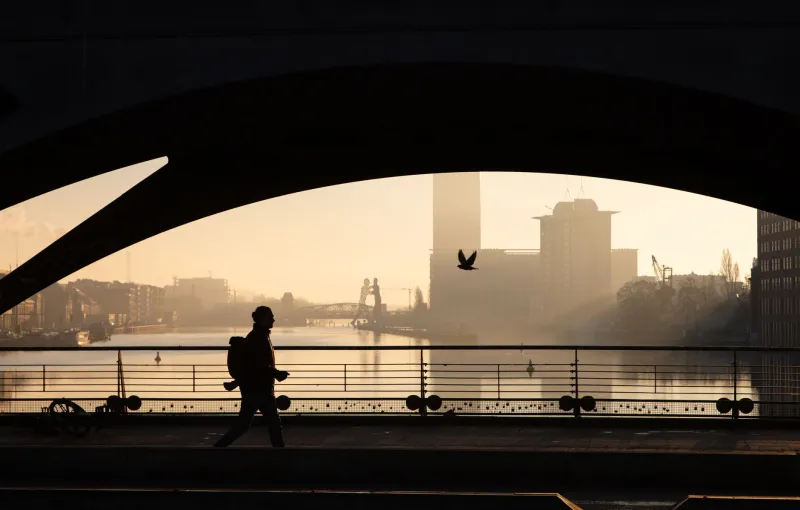
It's 7:15 a.m. in Portland, Oregon. While most of the city is white-knuckling the Burnside Bridge or rage-scrolling through traffic apps, Marcus Webb is gliding down the Willamette River on a 12-foot touring board, coffee thermos bungee-corded to the front deck, downtown skyline dead ahead. He's been doing this three mornings a week for the past two years, and he's not going back.
"I used to spend 45 minutes in the car, stressed before I even got to the office," he says, paddling with long, unhurried strokes. "Now I show up actually awake. Actually calm. It's kind of embarrassing how much better my mornings are."
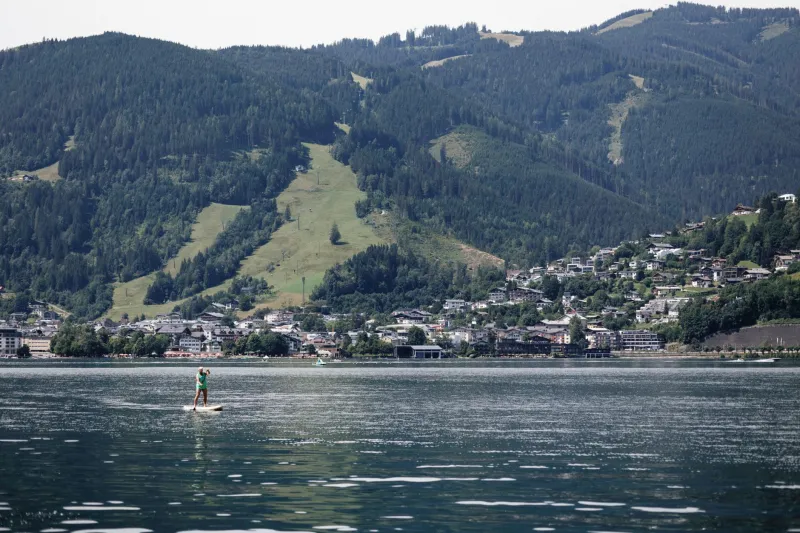
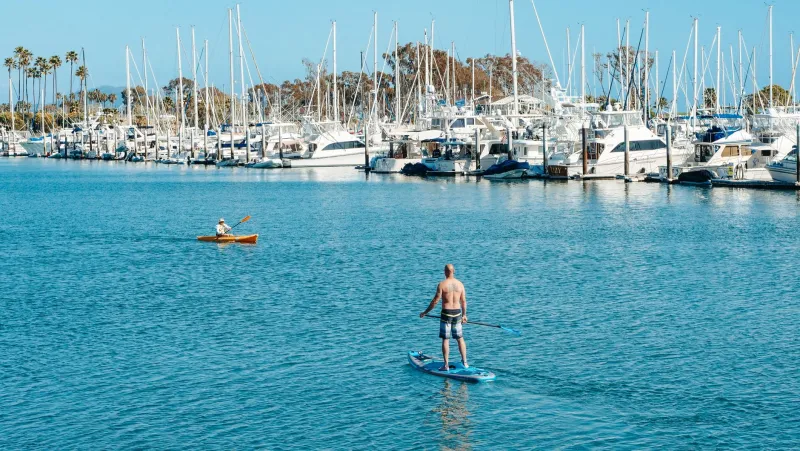
Marcus isn't alone. From Seattle's Lake Union to the waterways threading through Miami, Chicago's lakefront, and the bayous of New Orleans, a loose but passionate community of SUP commuters is quietly rewriting what a morning routine can look like. They're not training for a race. They're just trying to get to work — and they've found a better way to do it.
Why Paddle to Work? The Answer Is Almost Too Obvious
Ask any SUP commuter why they started and you'll get roughly the same answer delivered in a dozen different ways: because it's better. Better for the body, better for the mind, and — on a planet that's getting warmer by the year — better for the environment.
The fitness math alone is compelling. A moderate paddling session burns somewhere between 300 and 500 calories per hour depending on pace and conditions, all while engaging your core, shoulders, legs, and back in the kind of low-impact, functional movement that a gym machine can't really replicate. Do that twice a day, five days a week, and you've essentially built a full workout program into your commute without carving out a single extra hour.
But the mental side might be even more significant. Research on blue space — environments near water — consistently links proximity to open water with lower cortisol levels, improved mood, and better focus. SUP commuters are essentially front-loading their day with one of the most effective stress-reduction tools available. No app required.
And then there's the environmental piece. Transportation accounts for the largest share of U.S. greenhouse gas emissions, and even short car trips carry a surprisingly heavy footprint. Replacing a few of those trips with a zero-emission paddle doesn't just feel good — it actually is good, in a measurable way.
The Cities Making It Work
Not every American city is built for this, and the SUP commuters we spoke to were refreshingly honest about that. Infrastructure matters. A lot.
Portland and Seattle have an edge thanks to their navigable urban rivers and established water-access culture. Both cities have multiple boat launches and waterfront parks that function, unofficially, as commuter launch points. Miami's Brickell and Coconut Grove neighborhoods have seen a surge in paddlers using Biscayne Bay and the Miami River as genuine transit corridors, with a few forward-thinking condo developments even installing dedicated SUP storage and rinse stations.
Chicago is a fascinating case. The Chicago River, once famously reversed in an engineering feat to protect Lake Michigan, now flows through the heart of the city in a way that's increasingly pedestrian — and paddler — friendly. A growing number of Chicagoans are using the river system to move between neighborhoods, though navigating the lock system and boat traffic requires some planning and local knowledge.
New Orleans, with its network of bayous and canals, has a geography tailor-made for water commuting that the city has been slow to fully embrace. But local paddlers like Kezia Tran, who uses a 10-foot inflatable to run errands in the Bayou St. John neighborhood, are proving the concept one grocery run at a time. "People look at me like I'm crazy," she laughs, "but I'm home before they've found parking."
The Real Challenges (And How Paddlers Are Solving Them)
Let's be straight: SUP commuting isn't plug-and-play. There are real logistical hurdles, and glossing over them wouldn't do anyone any favors.
Storage is the first problem. Where do you keep your board at the office? Inflatable SUPs have been a game-changer here — modern inflatables pack down to the size of a large backpack and can be stashed under a desk or in a locker room. Brands like Red Paddle Co., iROCKER, and Bluefin have built their touring lineups around exactly this use case, and the performance gap between inflatables and hard boards has narrowed significantly in recent years.
Then there's the question of arriving presentable. Most SUP commuters develop a system: dry bag with work clothes, a gym membership or office shower for the rinse-off, maybe a quick change in a waterfront restroom. It adds maybe 15 minutes to the routine, and most paddlers say it's worth every second.
Safety is non-negotiable. Urban waterways can be busy with motorized traffic, and visibility matters. A leash, a PFD, and a bright-colored board or paddle are baseline requirements. Many cities have specific rules about personal watercraft in certain channels, so knowing your local regs before you launch is essential.
Finally, there's the weather variable. Most committed SUP commuters paddle through light rain and modest wind, but they also know when to drive. Having a car or bike as a backup isn't failure — it's just practical.
The Culture Forming Around It
What's striking about the SUP commuter community isn't just the individual lifestyle choice — it's the way a culture is forming around it. Online groups like "SUP Commuters USA" on Facebook have thousands of members sharing route tips, gear recommendations, and photos of their morning paddles. Local clubs in cities like Austin, San Diego, and Annapolis have started organizing "commuter paddles" where groups paddle together to work on shared routes.
There's also a slow but real policy conversation beginning to happen. Advocacy groups are pushing city planners to consider water access when developing waterfront real estate, and a handful of urban planning departments have started including "blue infrastructure" — safe launch points, signage, water taxi integrations — in long-range transit discussions.
It's early days. But the people out on the water every morning aren't waiting for the policy to catch up.
Your Commute, Your Current
You don't have to live in Portland or Miami to think about this differently. If you're near any navigable waterway — a river, a bay, a lake with public access — there's probably a version of this that works for your life, even if it's just one morning a week.
Start small. Map your local water. Find your launch points. Figure out the gear situation. And then, one Tuesday morning, leave the car in the driveway and paddle to whatever comes next.
The traffic will still be there if you want it back. But chances are, you won't.