No Rulebook Required: How Paddlers Keep Their Communities in Check
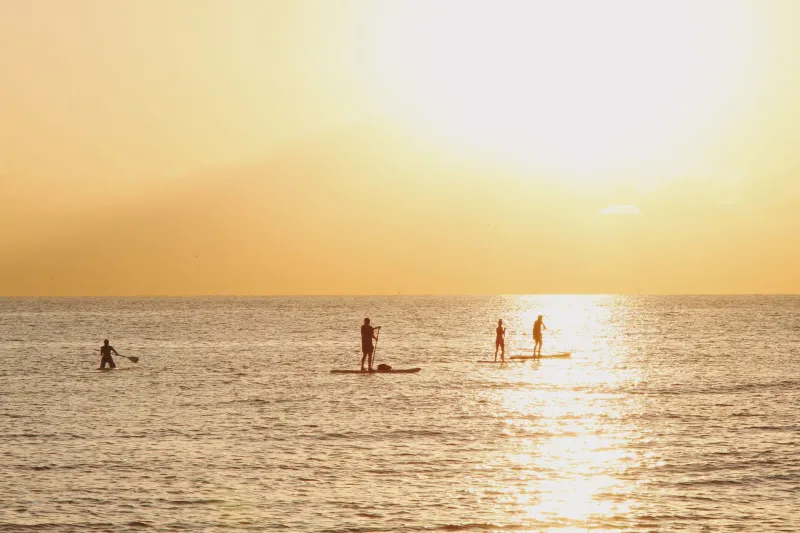
Pull into any popular put-in on a busy Saturday morning — Lake Tahoe's west shore, the Potomac near DC, the bays around Clearwater — and you'll notice something interesting. Dozens of paddlers sharing tight water, navigating around each other, yielding to wildlife, and generally getting along without a park ranger on every dock or a laminated code of conduct bolted to every launch ramp. Somehow, it works. Most of the time, anyway.
That's not an accident. It's the result of years of informal community-building, quiet social pressure, and a shared understanding of what it means to be a good steward of the water. The unwritten rules of SUP culture are real — and in a lot of ways, they're more effective than anything a governing body could ever dream up.
The Etiquette Nobody Teaches You
Ask a seasoned paddler what the "rules" are, and they'll probably laugh. There's no official handbook. No licensing test. No orientation video. You just kind of... absorb it.
But spend enough time at a busy launch spot and the code becomes clear. Give right-of-way to kayakers and canoes in narrow channels. Don't blast music in areas where other people are trying to connect with nature. Keep your dog leashed at the ramp if other people are launching. Don't anchor in the middle of a paddling corridor and set up a floating party without reading the room first.
And perhaps most importantly: if you see a nesting bird colony, a manatee, or a seal hauled out on rocks — you give it a wide, quiet berth. No exceptions. No "just one quick photo" justifications.
These aren't posted anywhere. They're passed down through communities, modeled by experienced paddlers, and enforced — when necessary — through the mildly uncomfortable but surprisingly effective tool of social accountability.
How Conflict Actually Gets Resolved
Here's the thing nobody talks about: the water isn't always peaceful. People cut each other off. Motorized watercraft ignore no-wake zones. Rental paddlers who've had exactly fifteen minutes of instruction wander into the middle of a racing practice. Campers set up directly on a wildlife corridor that the local SUP club has spent years protecting through informal agreements with land managers.
In most of these cases, it doesn't escalate. A word gets exchanged. Someone explains the situation. The newer person didn't know, they adjust, and that's that.
"Most people aren't being jerks on purpose," says one paddling instructor from coastal North Carolina who's been leading tours and teaching clinics for over a decade. "They just don't know yet. And honestly, if you approach it right — not accusatory, just informative — nine times out of ten they're grateful someone told them."
The tenth time, of course, is where things get spicy. And that's where community reputation starts doing heavy lifting. In tight-knit paddling circles, word travels fast. The person who consistently parks in the launch zone, who ignores wildlife buffers, who gets aggressive with other water users — they become known. They stop getting invited. Clubs quietly stop welcoming them at events. It's not a formal ban. It's just the natural consequence of not playing well with others.
Why Self-Regulation Works Better Than You'd Expect
Formal governance of public waterways is slow, underfunded, and often disconnected from the on-the-ground reality of how people actually use these spaces. A rule passed by a county parks commission might address a problem that already resolved itself organically two seasons ago — or miss the one that's actually causing friction right now.
Grassroots paddling communities, on the other hand, are adaptive. They respond in real time. When a new launch spot starts getting crowded and conflicts pop up, regular users start working it out among themselves — establishing informal peak hours, designating areas for beginners versus more experienced paddlers, creating WhatsApp groups and Facebook communities where norms get discussed and reinforced.
In Florida's Indian River Lagoon, local paddling groups have developed their own seasonal wildlife protocols that go well beyond what's legally required — voluntarily avoiding certain mangrove channels during bird nesting season, sharing GPS waypoints of manatee activity so paddlers can reroute, even posting informal signage at launch points. None of it mandated. All of it effective.
The same dynamic plays out in the Pacific Northwest, where SUP communities near sensitive orca habitat have self-organized distance guidelines and quiet-water commitments that predate and often exceed official state recommendations.
The Social Architecture of a Healthy Paddle Spot
What makes these informal systems hold together? A few things, it turns out.
First, there's a critical mass of experienced users who model good behavior and aren't afraid to gently correct it when they see something off. These aren't self-appointed sheriffs — they're just people who've been around long enough to care about the spot and have enough social capital to say something without it landing wrong.
Second, there's genuine shared investment. People who paddle the same water regularly develop a real attachment to it. They've watched the osprey nests, seen the water quality fluctuate, noticed when certain species show up and when they don't. That attachment creates motivation to protect the spot — not because someone told them to, but because it matters to them personally.
And third — maybe most importantly — there's a culture of welcoming new paddlers in the right way. The best communities don't gatekeep. They orient. They invite newcomers into the shared understanding early, framing the informal rules not as restrictions but as the reason the spot is still worth coming back to.
When It Breaks Down
To be fair, self-regulation isn't a perfect system. It struggles with scale — a small, tight-knit community of thirty regulars can maintain norms pretty well; a spot that suddenly blows up on social media and gets five hundred visitors on a holiday weekend is a different story entirely.
It also tends to have blind spots around who gets to define the norms in the first place. Paddling communities that are predominantly one demographic can develop unspoken rules that feel exclusionary to newcomers who don't share the same background or communication style. That's a real tension worth sitting with.
And it's not equipped to handle genuinely dangerous behavior — someone launching in active lightning, a paddler clearly too intoxicated to be on the water, or a vessel that's creating a serious hazard. Those situations call for actual authorities, and the community norm should be to involve them without hesitation.
The Bigger Picture
What's striking about how SUP communities self-govern is that it reflects something genuine about why people paddle in the first place. They're not out there for a transaction. They're not checking a box. They came to the water because something about it matters to them — the quiet, the physical challenge, the wildlife, the sense of being somewhere real.
When you care that much about a place, you tend to act like it. And when enough people do that together, something that looks a lot like community stewardship emerges — no committee required, no bylaws, no enforcement budget.
The water has its own kind of gravity. Turns out, so does the culture that grows up around it.