Small Towns, Big Water: The Quiet Economic Revolution Paddleboarding Is Sparking Across Rural America
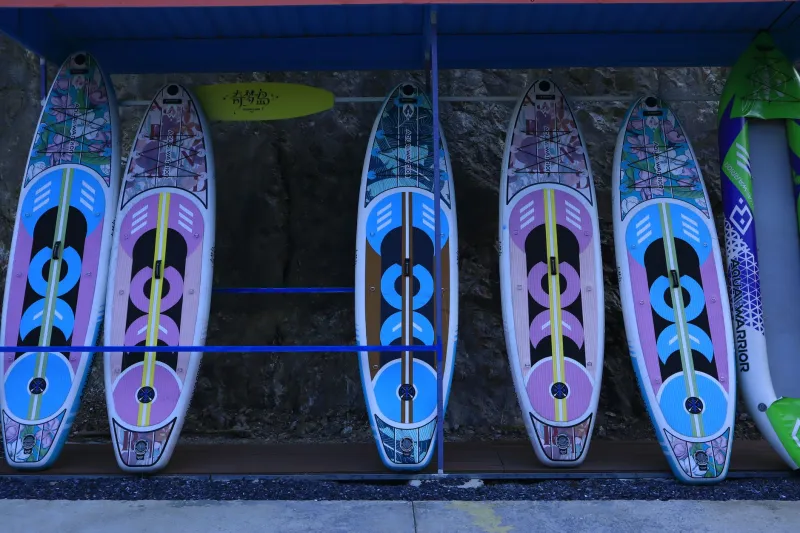
There's a bait shop on the edge of Eminence, Missouri, that used to survive almost entirely on trout fishermen. These days, half the parking lot is taken up by a SUP rental trailer. The owner, a third-generation local named Dale, didn't plan it that way. A few years back, a couple from St. Louis showed up asking if he knew anywhere they could rent a paddleboard for the Current River. He didn't. Then another couple asked. Then a whole group. Eventually, Dale did the math.
"I figured if I'm turning people away every weekend, that's just money walking out the door," he said. Now he runs a full-season rental operation alongside the bait and tackle — and the paddleboard side of the business pulls in more revenue between May and September than fishing gear does all year.
Dale's story isn't unusual anymore. Across rural America, small towns with access to clean, calm water are quietly discovering that stand-up paddleboarding has become a legitimate economic engine — one that doesn't require a factory, a franchise, or a million-dollar grant from the state.
Water as a Main Street Asset
For decades, rural economic development conversations have centered on the same tired playbook: attract manufacturing, build industrial parks, hope a big-box retailer notices you. But in towns near rivers, lakes, and coastal waterways, a different kind of development is happening organically — driven not by economic planners but by paddlers who keep showing up and spending money.
In towns like Brevard, North Carolina, near the French Broad River, or Sandpoint, Idaho, sitting on the edge of Lake Pend Oreille, the outdoor recreation economy has become the dominant commercial force. SUP fits neatly into that ecosystem, but it's also creating its own lane. Unlike whitewater kayaking, which demands significant skill and equipment investment, paddleboarding has a low barrier to entry. That accessibility translates directly into a broader customer base — families, older adults, beginners — all of whom need gear, food, lodging, and guides.
Local outfitters in these towns report that SUP renters tend to stay longer than day-trippers. They book cabins. They eat at local restaurants twice a day. They buy sunscreen and sandals from the hardware store because they forgot theirs. The economic ripple effect from a single paddler can touch six or seven local businesses in a single visit.
The New Infrastructure of a Paddle Town
Building a town around water access isn't as simple as slapping a kayak rack on the riverbank. The communities that are genuinely thriving in the SUP tourism space have invested — sometimes painfully — in infrastructure that makes the experience seamless.
That means launch sites with actual parking. It means restrooms that don't embarrass anyone. It means shuttle services so paddlers can do point-to-point runs without leaving a car stranded ten miles downstream. In Leavenworth, Washington, a small town already famous for its Bavarian-themed main street, local operators have spent years building out exactly this kind of water infrastructure along the Wenatchee River. The result is a shoulder-season tourism bump that keeps businesses alive between ski season and summer peak.
Not every town has the capital or the coordination to pull that off. In some places, the lack of basic amenities — or the absence of a clear launch point — means paddle tourism stalls before it starts. Economic development officials in rural counties are increasingly looking at water access infrastructure the same way they once looked at highway on-ramps: as foundational to whether commerce can even happen.
Tension at the Water's Edge
It's not all smooth water. When a quiet town becomes a paddle destination, the friction is real.
Property owners along popular rivers and lakes sometimes find their private banks treated as public rest stops. Noise, litter, and the sheer volume of weekend visitors can turn a peaceful waterfront community into something that feels uncomfortably like a theme park. In some small towns in the Southeast, locals have started pushing back against the influx — not because they're anti-tourism, but because the growth happened faster than the infrastructure to support it.
There's also the affordability question. As paddle tourism drives up property values and rents in scenic small towns, the locals who built those communities can find themselves priced out. It's a pattern that mirrors what's happened in ski towns and surf towns over the decades — and it's something that communities riding the SUP wave would be wise to get ahead of before the displacement becomes irreversible.
Guide businesses, too, are navigating complicated waters. The boom in paddle tourism has attracted outside investors and national outfitter brands looking to plant flags in popular destinations. For local operators who built their businesses from scratch, competing with a well-funded brand that can undercut on price while offering a slicker app experience is a genuine threat. The community feel that made the destination worth visiting in the first place can erode fast when it gets commodified.
The Guides Holding It Together
Amid all of that complexity, the local guides are often the ones keeping the experience honest.
In places like the Boundary Waters region of Minnesota, or along the spring-fed rivers of the Texas Hill Country, independent SUP guides are functioning as de facto cultural ambassadors. They're the ones who know where the herons nest and why you don't want to paddle that particular stretch in July. They're the ones who tell visitors to pack out their trash, respect the private land on the north bank, and tip the woman at the café in town because she's been there thirty years.
These guides aren't just selling an outdoor experience. They're selling a relationship with a place — and that's something a national brand with a call center in Denver genuinely can't replicate.
The towns that seem to be navigating the SUP economy most successfully are the ones where local guides, business owners, and municipal leaders are actually talking to each other. Where there's a shared sense of what makes the place worth protecting, and a willingness to grow deliberately rather than just fast.
What Comes Next
The SUP tourism wave isn't cresting anytime soon. Participation in paddleboarding has grown consistently over the past decade, and the demographics keep broadening. As more Americans look for outdoor experiences that don't require a lift ticket or a boat launch, calm water access is going to keep appreciating in value — both literally and figuratively.
For small towns sitting on that water, the opportunity is real. So is the responsibility. The communities that figure out how to grow their paddle economy without hollowing out their identity are going to end up with something genuinely rare: a thriving local economy that actually reflects the place it came from.
For the rest, well — the Current River will still be there. Whether Dale's bait shop is still standing next to it is a different question entirely.